








How to Play 4 Elements Tetris-4 Elements Tetris
Similar Games





How to Play
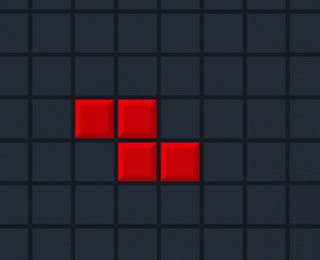
The basic way to play 4 Elements Tetris is to control falling tetromino shapes and place them on the grid so that complete horizontal lines are formed. When a line is filled across the playfield, it clears, making room for future pieces. The challenge comes from the fact that pieces arrive continuously, and each placement changes the surface available for the next one.
- Watch the active tetromino as it enters the playfield.
- Move or rotate it into a position that fits the current stack.
- Place the piece so it does not create unnecessary holes or unstable towers.
- Complete a horizontal row to clear it and reduce pressure on the board.
- Repeat the process while keeping the stack manageable.
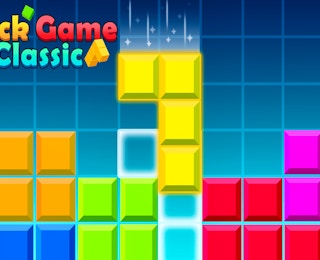
The elemental themes are primarily a visual layer. Fire, water, earth, and air styling, along with skins and frames, change how the game looks, but the documented objective remains aligning falling tetrominoes and clearing lines. That means the same core skills apply regardless of which visual theme a player prefers.
New players should not worry about achieving 100+ line clears immediately. The first goal is consistent placement: learn how each tetromino shape behaves, practice rotating before the piece lands, and prioritize a flat playing surface. Once that habit forms, longer runs become more natural.
Game Rules
The documented rules center on a small set of principles. Tetrominoes fall through the playfield, the player arranges them, and completed horizontal lines are removed. The game is a tile-matching puzzle in the Tetris tradition, so spatial reasoning and timing matter more than combat, story progression, or character abilities.
| Rule Area | What Players Should Know |
|---|---|
| Pieces | Falling tetromino shapes must be positioned on the grid. |
| Objective | Align pieces to clear horizontal lines. |
| Cleanup | A completed row removes filled space and lowers pressure on the stack. |
| Theme | Fire, water, earth, and air provide visual identity and customization context. |
| Session goal | The description highlights the possibility of clearing 100+ lines per game. |
The available information does not confirm special rule variants such as gravity flips, elemental powers, piece merging, or puzzle objectives beyond line clearing. Because the game is described as maintaining the iconic gameplay everyone loves, players should assume the rules stay close to the classic stacking-and-clearing model unless the in-game interface states otherwise.
Controls and Input Basics
Exact key bindings are not specified in the provided game description, so the safest guidance is to focus on the control goals rather than assumed buttons. In a Tetris-style game, the player needs to move the active piece horizontally, rotate it when necessary, and allow it to settle into the stack. The game's host page or on-screen prompts should confirm the precise inputs for keyboard, mouse, or touch devices.
- Positioning: Shift the tetromino left or right to align it with open spaces.
- Rotation: Turn the piece to match the shape of the current gap or surface.
- Descent: Let the piece fall naturally or guide it downward according to the game's controls.
- Placement awareness: Decide where the piece will lock before it reaches the bottom of its path.
Players should avoid memorizing hypothetical shortcuts until the game displays them. A good first-session habit is to make small, deliberate inputs and watch how the piece responds. Smooth control is often more valuable than fast control, especially for beginners who are still learning how tetromino shapes fit together.
Line Clearing Basics
Line clearing is the heart of 4 Elements Tetris. A horizontal line is cleared when it is completely filled across the playfield. Clearing lines does two important things: it removes blocks that occupy space, and it creates a cleaner surface for the next pieces. The best early strategy is not to chase flashy placements, but to make ordinary clears that keep the board balanced.
Before placing a piece, ask whether the move helps complete a row or whether it only fills empty space temporarily. A placement that leaves a hole under a raised section can be costly, because future pieces may not be able to reach the gap without first clearing the blocks above it. Keeping the surface as even as possible makes line clears more predictable.
The description's mention of clearing 100+ lines per game suggests that sustained line clearance is a meaningful benchmark. Beginners should treat 100 lines as a long-term goal. First aim for ten clean clears without major holes, then twenty, then gradually extend the run. Consistency comes from recognizing when a placement is merely filling space versus when it is advancing a completed row.