







How to Play Brick Game Classic Tetris - Rules & Controls-Brick Game Classic Tetris
Similar Games


Complete How to Play Guide
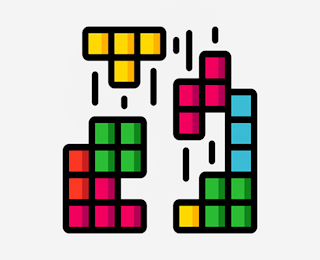
Brick Game Classic Tetris follows the classic Tetris rules that players have enjoyed for decades. The playfield is a vertical grid, and seven different tetromino shapes - each made of four squares - fall from the top one at a time.
As each piece falls, you control its horizontal position and rotation. The goal is to land pieces so they fit together with the existing stack, leaving no gaps. When you complete a full horizontal row, that row disappears and everything above it moves down.
The Gameplay Loop
- A new tetromino appears at the top and begins to fall.
- Move and rotate the piece while it is in the air.
- Drop it into the stack at your chosen position.
- Complete horizontal lines to clear them and free up space.
- Repeat as the falling speed gradually increases with each level.
Your score rises with every line you clear. The game becomes more challenging as you advance through the 1000+ levels, with pieces falling faster and faster. The round ends when the stack reaches the top of the playfield and a new piece cannot enter the grid.
The objective is easy to understand, but mastering the game takes practice. Knowing where each piece belongs, keeping the stack clean, and clearing multiple lines at once are the keys to long runs and high scores. If you're just getting started, check out our beginner tips for quick improvements, or head to the strategy guide once you're ready for advanced play.
Core Game Rules
Brick Game Classic Tetris follows the ruleset of classic Tetris. Understanding these rules is the foundation for playing well.
The Pieces
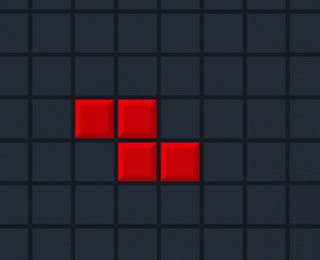
Seven tetromino shapes appear in the game, each made of four connected squares: the I, O, T, S, Z, J, and L pieces. Each shape has a different footprint, and every piece can be rotated into different orientations.
Line Clearing
When a horizontal row of the grid is filled with blocks, it is cleared from the board. Any blocks sitting above that row drop down to fill the gap, giving you more room to keep playing.
Game Over
The game ends when the stack of blocks reaches the top of the playfield and a new piece cannot enter. Keeping the stack low and even is the main way to stay alive.
Difficulty Progression
As you advance through the game's 1000+ levels, the falling speed increases. Higher levels demand faster decisions and more precise placement. For tips on handling the pace, see the beginner tips.
Controls Guide
Brick Game Classic Tetris is built around simple keyboard controls, so you can keep up as pieces fall faster.
- Move: Slide the falling piece left and right to position it above your target spot.
- Rotate: Turn the piece to match the shape of the gap you want to fill.
- Drop: Place the piece into the stack when you are happy with its position.
The controls are designed to respond quickly, which matters as the falling speed increases. Experiment with them during the early levels to get a feel for how each piece moves and rotates.
New players can find practical advice in the beginner tips.
Level Progression
One of the biggest draws of Brick Game Classic Tetris is its enormous level count. With more than 1000 levels to work through, the game offers far more long-term progression than a typical endless Tetris round.
Each level pushes the pace a little further. As the speed increases, pieces fall faster, leaving you less time to rotate and place them. Early levels give you room to learn, while later levels test your reflexes and your ability to plan ahead.
Surviving deep into the level progression requires more than just fast reactions. Players who build clean, even stacks and avoid gaps tend to last much longer. The levels form a continuous difficulty curve designed to keep challenging you whether it's your first game or your thousandth.