








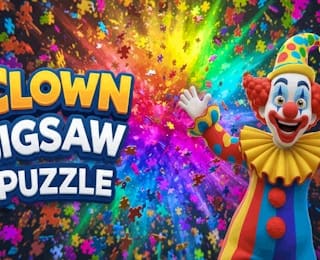
An effective strategy is to treat the puzzle as a map rather than a pile of random shapes. First, establish the outer boundary. Next, identify major color zones such as the clown hat, shirt, background burst, and facial features. These zones act as landmarks for smaller pieces.
Color blocking is especially useful in clown-themed artwork. When several pieces share the same saturated tone, compare their edge shapes before placing them. A piece may look correct by color but wrong by contour, so both visual cues should agree.
Another useful approach is negative-space reasoning. If a gap has a unique outline, search for the piece whose tabs and blanks mirror that outline. This reduces trial and error. For difficult confetti-like backgrounds, focus on tiny printed marks, gradients, or transitions between colors.
Finally, keep the workspace uncluttered. A tidy piece layout improves pattern recognition and helps maintain momentum during longer puzzles.