







Dogat Drawing Defense Strategy Guide-Dogat Drawing Defense
Similar Games
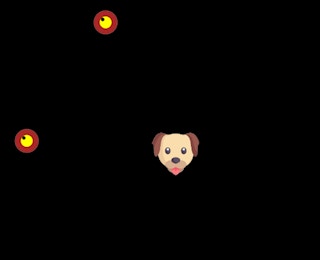
The strategy layer in Dogat Drawing Defense is about designing sketches that hold up under pressure. Once the basic loop is familiar, players can improve by thinking ahead about threat paths, weak points, and adjustment cost.
Design for the worst-case approach
Instead of blocking only the bee you see first, imagine the next possible route. A strong defense anticipates angles around the ends of a barrier. If a line stops a direct attack but leaves an obvious flank, extend it or add a secondary segment.
Use coverage shapes with few weak seams
Open curves can redirect threats but may leave endpoints vulnerable. Closed or semi-closed shapes can provide more reliable protection around the dog. The best shape depends on the puzzle, but seams and endpoints are usually the first places to inspect after a failure.
Separate blocking from redirection
Some sketches work best by stopping a threat outright; others work by guiding movement away from the pup. If a direct barrier is difficult to maintain, consider whether an angled line or curved shield can change the approach path without needing perfect coverage.
Minimize repair complexity
A defense that requires many tiny corrections is fragile. Favor structures where one adjustment fixes a whole class of leaks. For example, extending a main wall may be better than adding several small patches around it.
Study repeated failure patterns
If the same side fails multiple times, the issue is structural, not random. Move the shield toward that side, widen the coverage, or add a second layer. Repeated failure is a signal to revise the layout, not just repeat the same drawing.
Build a personal defensive vocabulary
With 50+ increasingly clever puzzles, advanced players benefit from recognizing reusable forms: direct walls, curved shells, angled deflectors, and layered barriers. Naming these shapes mentally makes later stages faster to assess and easier to modify.
Test one variable at a time
When a puzzle resists solution, changing many parts of the sketch at once makes it hard to learn. Adjust one factor: length, angle, distance from the dog, or coverage side. This turns guessing into diagnosis.
Avoid the perfection trap
A solution only needs to clear the puzzle. Elaborate drawings can be satisfying, but they may waste time and introduce unnecessary gaps. Efficient strategy is often the simplest shape that survives the threat pattern.
For foundational play flow, read the gameplay guide below on this page. For quick habit building, visit the tips page.
The gameplay guide helps players turn individual tricks into a repeatable session routine. While the strategy section focuses on advanced sketch design, this section describes how to approach each puzzle from start to finish.
Begin with a visual scan
Before drawing, identify the dog, the bee spawn areas, and the most direct lanes of attack. A scan takes only a moment but prevents blind placement.
Choose a defensive intent
Decide whether the first sketch is meant to block, redirect, or test. Early puzzles often reward a simple block. Later puzzles may require a shape that guides threats away from weak sides.
Place a minimal viable barrier
The first drawing should be small enough to evaluate quickly. A minimal barrier reveals where the puzzle applies pressure without committing to a complex layout.
Observe the failure point
When a bee gets through, note the exact location. Is it an endpoint, a thin segment, a missing side, or a secondary route? The failure point is the most valuable clue in the puzzle.
Make a targeted correction
Adjust only the weak area when possible. Targeted edits preserve working coverage and reduce the chance of introducing new gaps.
Scale confidence gradually
As puzzles become more clever, avoid assuming that one successful pattern will carry through every stage. Build confidence by repeating the scan-test-correct cycle and expanding your library of defensive shapes.
Keep sessions productive
If a puzzle feels stalled, step back and simplify. Returning to the dog center, the nearest threat, and the clearest gap often restores progress. The goal is steady improvement, not instant mastery.
This routine pairs well with the beginner tips and the advanced advice in the strategy section above. For answers to practical questions, see the FAQ.