





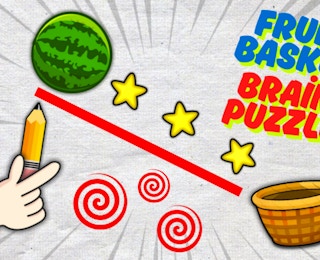
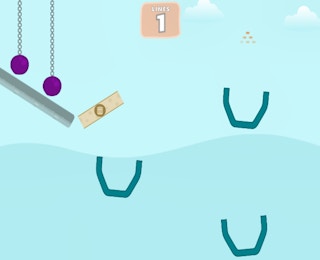

- Look at the entire level before drawing your first line.
- Identify the start and finish points first, then plan the route between them.
- Keep your line smooth and controlled, especially around tight spaces.
- If a path looks uncertain, pause and trace the route mentally before drawing.
- Use the early levels to learn how the game expects you to shape your line.
- Do not rush the first stroke; a slow, deliberate line is easier to control.

Draw Line: Puzzle Master Tips-Draw Line: Puzzle Master
Similar Games
Strong play in Draw Line: Puzzle Master comes from planning the path before you draw it. Instead of reacting immediately to the first visible opening, scan the level for the most reliable route. Look for clear corridors, avoid crowded areas, and choose a line that gives you room to make small corrections.
When a level feels difficult, break it into smaller sections: start to midpoint, midpoint to finish, and any narrow or tricky segment. Solving the puzzle in stages helps you avoid overshooting, crossing into the wrong area, or creating a path that is too long to manage.
Another useful strategy is to compare possible routes before committing. If one path is shorter but tighter, and another is longer but safer, choose the route that matches your current comfort level. As you improve, you can gradually take more direct paths once you understand the level layout.
- Starting the line too quickly without checking the full puzzle layout.
- Trying to force a path through a tight space when a wider route may be safer.
- Drawing a line that is too long or too short for the puzzle goal.
- Ignoring the shape of the level and relying only on a straight-line approach.
- Not re-evaluating the route when the first attempt does not look correct.
- Using the same line pattern for every level instead of adapting to the puzzle.
- Practice consistent hand movement so your line stays stable through curves and narrow gaps.
- Learn to recognize common puzzle patterns, such as open routes, blocked corners, and detours.
- Use the simplest successful path instead of an overly complex one.
- When a level has multiple possible routes, compare them before drawing and choose the one with the least risk.
- Review missed levels to understand which part of the path caused the problem: the start, the middle, or the final approach.
- Build speed only after you can complete a level with a clean, controlled line.