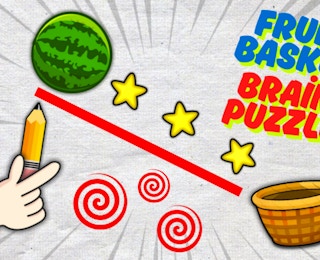
New players can improve quickly by focusing on fundamentals rather than trying to solve every level with one perfect drawing. Start with simple lines and observe how the fruit responds. A shallow slope may guide movement gently, while a steeper angle can increase speed. Testing small changes is often more productive than redrawing the entire solution from scratch.
- Watch first: Identify the fruit, basket, and any marked hazards before drawing.
- Draw deliberately: Slow, controlled strokes are easier to evaluate than frantic scribbles.
- Use short tests: A small line can reveal how physics behaves in a level.
- Adjust one variable: Change angle, length, or position, but not everything at once.
- Accept retries: Trial and error is part of the intended experience.
The goal as a beginner is to build a mental model of how drawn lines interact with fruit movement. Once that model is clear, more complex levels become easier to plan. For long-term context, review the level progression guide.
A strong strategy in Fruit Basket Brain Puzzle: Draw & Solve is to plan the fruit route before committing to a drawing. Think of the line as a physical guide: it can redirect movement, slow a fall, bridge a gap, or create a ramp. The best solutions often use the simplest shape that accomplishes the goal.
Planning steps
- Locate the start and target: Confirm where the fruit begins and where it needs to end.
- Identify risk areas: Notice swirls, edges, or open spaces that could derail the fruit.
- Choose a path: Decide whether a straight ramp, curved guide, or barrier is most suitable.
- Draw with intention: Place the line where it will have the clearest effect.
- Evaluate the result: Use each attempt to refine the next drawing.
Because the game is physics-based, small changes can produce different outcomes. A strategy that works in one level may need adjustment in another, so stay flexible and focus on reading the scene rather than memorizing fixed solutions.
Many players struggle with Fruit Basket Brain Puzzle: Draw & Solve because they rush the drawing phase. Since the puzzle is solved through created lines, impulsive strokes can create unintended ramps, blocks, or bounces. Another common issue is ignoring the fruit momentum: a line that looks correct on screen may cause the fruit to move too quickly or miss the basket.
- Overdrawing: Adding too many lines can clutter the physics simulation.
- Copying previous solutions: Each level may react differently, so repeated formulas can fail.
- Neglecting observation: Skipping the initial scan of hazards and targets leads to avoidable retries.
- Changing too much at once: When a test fails, adjusting several variables makes it harder to learn what went wrong.
- Forcing speed: The game rewards thinking, not rapid clicking.
Avoiding these mistakes usually means slowing down, making smaller adjustments, and treating each attempt as a diagnostic step. For positive habits, review the tactical tips and mechanics guide.
Tactical play focuses on precision and efficiency. Instead of asking what big shape can be drawn, ask what minimal addition will change the fruit path in the right direction. This mindset helps players avoid unnecessary complexity and makes failures easier to diagnose.
- Use angles deliberately: Slight angle changes can control speed and direction.
- Bridge gaps carefully: A line placed too high or too low may miss its purpose.
- Create stopping points: Barriers can be as useful as ramps.
- Plan for bounce or roll: Physics puzzles often reward anticipating what happens after first contact.
- Refine, do not restart mentally: Keep the successful part of a previous attempt and modify only the failing section.
These tactics are especially useful in later levels where the margin for error appears smaller. They also complement the level guide, which explains how challenge intensity can grow across the 240+ stages.