






How to Play Halloween Jigsaw Puzzles-Halloween Jigsaw Puzzles
Similar Games

Basic steps
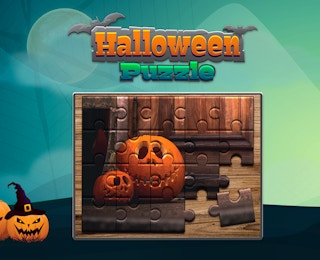
- Open a Halloween puzzle scene and look at the incomplete board.
- Identify loose pieces and compare their shapes, colors, and printed details with the empty spaces.
- Start with easy anchors such as corners, straight edges, or large recognizable objects like pumpkins and skulls.
- Place a piece only when its outline and artwork match the surrounding area.
- Continue filling smaller gaps until the entire scene is complete.
The game does not appear to require fast reactions. It is a visual matching task, so taking time to inspect each piece is usually more effective than rapid trial and error. If a piece does not fit cleanly, remove it and test another location instead of forcing it.
New players can benefit from the Beginner Tips and Game Features pages, which explain how the puzzle collection and Halloween artwork affect the solving process.
The rules of Halloween Jigsaw Puzzles are based on standard jigsaw logic. Each scene is divided into interlocking pieces, and every piece has one correct position in the finished picture. The board is considered complete when all required pieces are placed and the image is restored.
There is no documented point system, timer, or competitive mode in the available game information. The rules therefore focus on accurate placement rather than speed or score. A piece is correct when both its shape and its artwork align with the surrounding pieces and the intended scene.
Players may rearrange incorrect pieces as needed. The goal is not to preserve a first attempt but to reach a complete, coherent image. Because the game features multiple eerie scenes, rule compliance is simple: finish the current puzzle, then proceed to another scene if desired.
- Find the frame first. Edge pieces usually have one flat side and are easier to place than interior pieces.
- Use big shapes. Pumpkins, skulls, moons, and bats create strong visual landmarks that help orient the board.
- Sort by color. Separate orange pieces, dark background pieces, wood-tone pieces, and bright highlight pieces before placing them.
- Work outward from known areas. Once a small section is correct, nearby pieces become easier to judge.
- Do not rush. Jigsaw puzzles reward patience, and a careless placement can create confusion later.
Beginners should treat the first minute as a planning phase. Scan the whole board, notice the largest completed areas, and choose the easiest gap to fill. This reduces frustration and builds momentum.
Board management means keeping the puzzle area readable while you search for correct placements. In a digital jigsaw, loose pieces and partially filled regions can become visually crowded, especially in dark Halloween scenes.
A practical method is to group candidate pieces near the area you are working on, but not so close that they cover existing artwork. If the interface allows pieces to be moved freely, keep similar colors together: oranges near pumpkin regions, dark tones near night backgrounds, and browns near wood textures.
When testing a piece, place it temporarily, compare the lines, and move it away if it does not match. Avoid leaving many wrong pieces on the board, because they can distort your sense of the image. Clean board habits make pattern recognition faster and reduce repeated mistakes.