






Halloween Jigsaw Puzzles Tips and Strategy-Halloween Jigsaw Puzzles
Similar Games

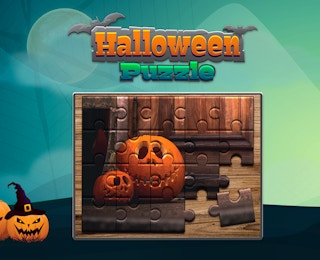
Stronger solvers use a region-based strategy instead of random placement. First, secure the outer boundary. Next, identify large objects in the Halloween artwork, such as a carved pumpkin face, a skull, a bat silhouette, or a moon. These objects provide high-contrast anchors that divide the puzzle into manageable zones.
After anchors are placed, work on transitions between zones. Pay attention to how colors blend: orange may fade into black, wood grain may meet shadow, and highlights may outline a shape. Piece tabs and blanks should support both the color pattern and the physical outline.
For difficult dark areas, use shape over color. When several pieces are nearly black, compare the curvature of edges and the direction of notches. Small changes in silhouette can reveal the correct location. Combine this approach with the Common Mistakes page to avoid inefficient habits.
- Forcing pieces. If a piece does not sit naturally, it is probably wrong. Digital puzzles usually provide clear alignment when a placement is correct.
- Ignoring edges. Skipping the border removes useful reference points and makes interior placement harder.
- Mixing similar colors. Halloween art often contains repeated blacks, oranges, and browns. Without sorting, pieces become difficult to compare.
- Chasing one tiny gap too long. If a section stalls, move to another area and return with fresh eyes.
- Relying only on color. Shape matters just as much as artwork, especially in shadowed regions.
Avoiding these mistakes is often more valuable than trying to solve faster. Careful placement reduces the need to undo work and keeps the board organized.
Advanced players can improve by building a mental map of the whole scene before placing many pieces. Study the target image and note major lighting directions, object boundaries, and repeating textures. Then solve in blocks rather than piece by piece.
Use negative space as a clue. Empty dark regions may seem featureless, but their borders are defined by surrounding objects. If three sides of a gap are known, the missing piece often reveals itself through the continuation of a curve or shadow.
For collections with 50+ scenes, track personal patterns. Some players find that wood textures are easier when matched grain by grain, while pumpkin surfaces are easier when matched by highlight and shadow. Turning these observations into a repeatable routine can make later puzzles feel more predictable.