







Home Dash Puzzle Game Guide: Tips and Strategy-Home Dash Puzzle: Draw to Save the Family
Similar Games
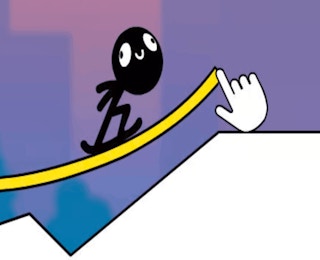
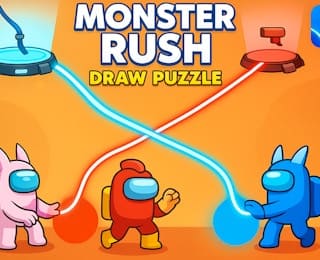
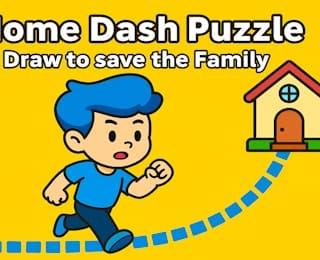

The gameplay loop in Home Dash Puzzle is observe, plan, draw, and review. Each level gives you a small puzzle space with a character, a destination, and hazards that make a careless route risky.
How a typical round unfolds
- You scan the board for the safest corridor between start and home.
- You imagine how the character will travel along your line.
- You draw the route with deliberate curves instead of rushed strokes.
- You watch the outcome and note where the path came too close to danger.
What makes the gameplay engaging
The fun comes from turning a simple line into a solution. A good route often feels like a miniature map: it avoids clutter, uses open space, and reaches the destination without unnecessary risk. Because the setting is a suburban neighborhood, players can also read the scene for clues about where dangers may be concentrated.
The loop rewards spatial reading. Over time, you learn to separate safe corridors from risky clusters, notice how obstacles shape possible paths, and anticipate where a direct route may fail. This makes the game more than a one-trick drawing toy; it becomes a practice ground for visual planning.
How to practice effectively
Instead of trying many random lines, treat each attempt as a test of one idea. Maybe you are checking whether a wider curve avoids a hazard, or whether a shorter diagonal route is too risky. By focusing on one variable at a time, you build a clearer understanding of how the level wants to be solved.
If you are new to the basics, start with the How to Play page. If you already know the controls, focus on the route-planning habits in the tips and strategy sections below.
New players can improve quickly by slowing down before they draw. The biggest beginner mistake is making a path too fast, too straight, or too close to visible hazards.
- Look before you draw. Identify the house, the character, and every obvious obstacle first.
- Choose the cleanest lane. A slightly longer route through open space is often safer than a short route near danger.
- Draw smooth lines. Sharp, messy strokes can make it harder to judge where the path will go.
- Use the edges carefully. The border of the play area can be useful, but it can also limit your options if you crowd the route.
- Treat failed attempts as information. If a path does not work, notice where it went wrong and adjust the next attempt.
- Avoid the first tempting line. The most direct route is often the most dangerous one, especially when hazards sit along the shortest path.
A simple beginner routine
- Find the destination first.
- Find the character second.
- Scan for the largest safe gap between them.
- Draw a calm line through that gap.
This routine helps prevent impulsive drawing. Instead of reacting to the closest obstacle, you train yourself to see the whole board. The goal as a beginner is not to be perfect immediately. It is to build the habit of planning a safe route before committing the line.
As levels become trickier, strategy shifts from simply reaching the house to controlling risk. The best routes are often the ones that leave room for uncertainty.
Route planning principles
- Prioritize safety over shortest distance. A longer path that avoids hidden dangers can be more reliable than a direct line.
- Read the neighborhood layout. Obstacles often cluster in ways that suggest where a character should not pass.
- Keep the path predictable. Smooth curves are easier to evaluate than jagged lines with sudden direction changes.
- Leave margin for error. Do not place the route flush against hazards if a wider lane is available.
- Adapt to the level goal. Some puzzles reward creative routing, so test whether a curved, looping, or angled path solves the scene better than a straight dash.
- Use indirect geometry when blocked. If a direct corridor feels unsafe, consider going around an obstacle first and then cutting back toward home.
How to improve faster
After each attempt, ask one focused question: where did the route come closest to failure? Fixing that single weak point is usually more effective than redrawing the entire path from scratch. Over time, this builds a stronger instinct for safe drawing in Home Dash Puzzle.
Advanced mindset
Strong players do not just draw lines; they design buffers. A good route anticipates that hazards may be closer than they appear, that movement may reveal new risks, and that a neat path is often more stable than a rushed one. When in doubt, widen the lane, smooth the curve, and give the character more room to reach home safely.