






Jigsaw Fantasy Puzzles Tips & Strategy-Jigsaw Fantasy Puzzles
Similar Games
Beginner Tips for Jigsaw Fantasy Puzzles
If you are new to digital jigsaw puzzles or new to Jigsaw Fantasy Puzzles specifically, these foundational tips will help you build confidence and develop good habits from your very first session.
1. Start with a Smaller Piece Count
Although the game offers 1,000+ customizable pieces, you do not have to use them all right away. Begin with a smaller configuration to learn the controls, understand how pieces snap together, and get comfortable with the rotation mechanic. Once the basics feel automatic, gradually increase the piece count to raise the challenge.
2. Always Find the Edge Pieces First
This is the single most important habit a jigsaw beginner can develop. Edge pieces have one flat side and are easy to spot. Building the border first creates a frame that defines the puzzle's boundaries, giving you a reference structure for placing interior pieces. Even with a large puzzle, spending five minutes on the border saves far more time overall.
3. Sort Pieces by Color
The fantasy artwork uses bold, distinct color regions. Before placing any interior pieces, sort your loose pieces into color groups — reds here, blues there, greens in another pile. When you are working on a specific zone of the image, you only need to look at the matching color pile, dramatically reducing the number of pieces you evaluate at any moment.
4. Keep the Reference Image Visible
Resist the temptation to solve purely by shape matching. The reference image tells you what colors and patterns belong in each area. Glancing at the reference before picking up a piece helps you predict where it goes, turning a blind search into a targeted placement.
5. Do Not Force Pieces
If a piece does not snap into place, it does not belong there — no matter how close it looks. Forcing pieces leads to frustration and wasted time. Trust the snap mechanic: when the right piece meets the right slot at the right rotation, it locks in cleanly. If it does not lock, move on.
6. Work One Section at a Time
Avoid the impulse to scatter pieces across the entire board. Focus on completing one contiguous region — a corner, a color block, or a character detail — before moving to the next. Finished sections act as anchors, making adjacent placements progressively easier.
7. Embrace the Rotation Control
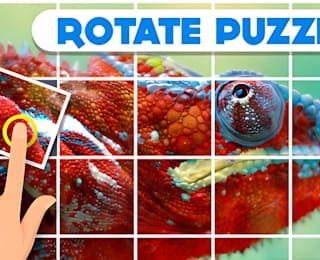
New players sometimes forget to rotate pieces and then wonder why nothing fits. Make rotation part of your default workflow: pick up a piece, try it in place, and if it does not fit, rotate it before trying the next slot. Over time, you will develop an instinct for which orientation a piece needs based on the shape of the surrounding gap.
8. Take Breaks Without Guilt
Jigsaw puzzling is meant to be enjoyable, not stressful. If you feel your focus slipping, close the tab and come back later. A rested brain spots patterns and shapes far more efficiently than a fatigued one. The game preserves your progress, so nothing is lost when you step away.
Once you have mastered these basics, level up your approach with the advanced techniques covered in our Strategy Guide, and learn what pitfalls to watch out for in Common Mistakes.
Advanced Strategy Guide for Jigsaw Fantasy Puzzles
Once the beginner fundamentals are second nature, the following strategies will help you solve puzzles faster, handle larger piece counts with ease, and extract the full creative potential of the game's customization system.
Color Blocking at Scale
With 1,000+ pieces, a simple color sort is not enough. Refine your sorting into sub-color groups. For example, within the red zone, separate bright red from dark red, and red-with-blue-edges from red-with-yellow-edges. The more granular your initial sort, the fewer candidates you evaluate per placement. This front-loaded organization pays exponential dividends on large puzzles.
Pattern and Gradient Tracking
The fantasy artwork includes gradients and repeating patterns. Learn to read these as directional cues. If a gradient shifts from light blue to dark blue across a region, you can place pieces in order along that gradient, using each successfully placed piece as a template for the next. This chain method reduces each placement to a single comparison rather than a full search.
Corner-First Assembly
After building the border, tackle the four corners of the interior. Corners are constrained by two border edges, meaning only one interior position can accept a given corner-adjacent piece. Solving corners early extends the locked frame inward and creates multiple new anchor points simultaneously, accelerating the rest of the solve.
Distinctive Feature Hunting
Scan the reference image for unique, high-contrast features — the character's face, a particularly bright puzzle piece in the background pattern, a sharp color boundary. Locate the corresponding loose pieces and place them first. These landmark pieces are unambiguous and require minimal shape testing, giving you quick wins that build momentum and expand the anchored area.
Strategic Use of Customization
Treat the customization system as a training tool. Deliberately set piece counts slightly above your current comfort zone to stretch your skills. After completing a 500-piece puzzle, try 750. After 750, attempt 1,000+. Progressive overload — the same principle used in physical training — applies to puzzle-solving fluency. Each increment builds pattern-recognition speed and spatial reasoning that carry over to every future puzzle.
The Two-Pass Method
For very large puzzles, consider a two-pass approach:
- Pass 1 – Easy placements: Go through all loose pieces and place every one that has an obvious match. Do not spend more than a few seconds on any single piece. This pass quickly expands the locked area.
- Pass 2 – Hard placements: Return to the remaining pieces with a larger anchored framework. The gaps are now smaller and more defined, making shape matching faster and less ambiguous.
Minimize Eye Travel
On a large board, constantly scanning between the tray and the puzzle wastes time and causes fatigue. Organize your workspace so that the active color group's pieces are near the region you are currently solving. Reduce the physical (or virtual) distance between candidate pieces and target slots.
Know When to Switch Zones
If you have tried every remaining piece in a zone without a successful placement, stop. Move to a different zone. Continuing to test the same small set of pieces against the same gap yields diminishing returns. A zone switch resets your perspective and often reveals that a piece you dismissed earlier fits perfectly in a new location.
Review and Reflect
After completing a puzzle, briefly review which strategies worked and which did not. Did color blocking save you time? Did the two-pass method feel natural? Self-assessment after each session compounds into measurable improvement over successive puzzles, especially when you leverage the customization system to target your weakest areas.
Even advanced players fall into traps. Read our Common Mistakes section to identify habits that silently slow down your solve time, and revisit Beginner Tips to reinforce the foundations that make advanced strategies possible.
Common Mistakes in Jigsaw Fantasy Puzzles
Even experienced puzzle solvers develop habits that cost time and cause frustration. Below are the most frequent mistakes players make in Jigsaw Fantasy Puzzles, along with how to correct each one.
1. Skipping the Border
The mistake: Diving straight into interior pieces without assembling the frame first.
Why it hurts: Without a border, you have no fixed reference for scale, orientation, or boundary. Interior pieces float in undifferentiated space, and every placement becomes a guess.
The fix: Always spend the first few minutes identifying and placing edge pieces. The border is the single highest-leverage step in any jigsaw solve.
2. Forcing Pieces into Wrong Slots
The mistake: Pushing a piece into a gap because it "looks close enough," only to have it reject and reset.
Why it hurts: Forced attempts waste seconds per piece, and across hundreds of pieces, those seconds add up. More importantly, repeated rejection breeds frustration and erodes focus.
The fix: Trust the snap mechanic. If a piece does not lock, it does not belong there. Move on immediately.
3. Ignoring the Reference Image
The mistake: Solving entirely by shape matching without consulting the completed picture.
Why it hurts: Shape-only solving turns every placement into a brute-force search across all remaining pieces. Color and pattern information from the reference can eliminate 80% of candidates instantly.
The fix: Glance at the reference before each placement. Let color and pattern guide your shape search, not the other way around.
4. Working Randomly Across the Board
The mistake: Placing a piece in the top-left, then jumping to the bottom-right, then back to the center.
Why it hurts: Scattered placements prevent you from building contiguous anchored regions. Each isolated placed piece provides minimal context for its neighbors.
The fix: Commit to one zone until it is substantially complete, then move to an adjacent zone. Contiguous progress compounds; scattered progress does not.
5. Neglecting Rotation
The mistake: Testing a piece in a slot without rotating it first, then concluding it does not fit.
Why it hurts: Many pieces will match a slot perfectly after a 90° or 180° rotation. Skipping rotation means you discard valid candidates prematurely and loop back later to retry them.
The fix: Make rotation the default second step after picking up a piece. Try, rotate, try again before moving on.
6. Underutilizing Customization
The mistake: Always playing at the maximum 1,000+ piece setting, or always playing at the minimum, without adjusting to your current skill or mood.
Why it hurts: Playing consistently above your level leads to burnout and discouragement. Playing consistently below your level leads to boredom and stagnation.
The fix: Use the customization system deliberately. Match piece count to your goal for the session — challenge, practice, or relaxation.
7. Pushing Through Fatigue
The mistake: Continuing to solve when your eyes are tired and your pattern recognition has degraded.
Why it hurts: Fatigued solvers make more errors, take longer per placement, and experience disproportionate frustration. The marginal time spent past the fatigue threshold is often wasted.
The fix: Set a personal signal — "I have tried the same three pieces twice without success" — and treat it as a cue to take a five-minute break. Return refreshed.
8. Not Sorting Loose Pieces
The mistake: Leaving all unplaced pieces in a single undifferentiated pile.
Why it hurts: Searching an unsorted pile of several hundred pieces for a specific color or shape is slow and mentally exhausting.
The fix: Invest two to three minutes at the start (and periodically during the solve) to sort loose pieces by color group. The time saved over the remainder of the puzzle far exceeds the sorting cost.
Avoiding these mistakes accelerates your progress considerably. Pair this awareness with the proactive techniques in our Strategy Guide and the foundational habits in Beginner Tips for a well-rounded solving approach.