










Jigsaw Puzzle Mania Tips and Strategies-Jigsaw Puzzle Mania
Similar Games
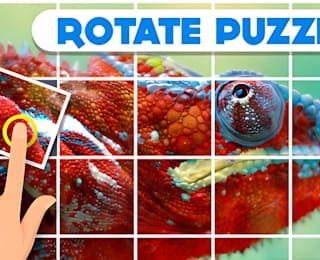
Beginners can improve quickly in Jigsaw Puzzle Mania by replacing random piece testing with a simple visual routine. The tips below are tailored to the game's animal and landscape puzzle themes.
Start with the easiest edges
Locate pieces with straight sides before working on interior details. Even if the full border is not completed immediately, a few edge pieces can establish corners and orientation. This gives the puzzle a framework and prevents pieces from drifting into ambiguous positions.
Use high-contrast animal features
Animal puzzles often contain strong anchors: eyes, noses, mouths, tongues, ears, and fur boundaries. These features are easier to recognize than uniform fur or background areas. Place them early, then extend outward into softer textures.
Break landscapes into bands
Landscape puzzles can be approached by horizontal or diagonal zones. Identify sky, horizon, middle ground, and foreground. Clouds, tree lines, water edges, and shadows create natural separators. Working band by band reduces overwhelm.
Group similar colors
Gather pieces with similar tones together. For example, keep light blue sky pieces separate from dark green foliage, and keep brown fur pieces separate from black nose details. Grouping does not solve the puzzle instantly, but it narrows the search space for each placement attempt.
Do not force a piece
If a piece seems to fit by color but leaves an odd gap, it may be wrong. Jigsaw pieces must match both artwork and shape. Forcing alignment can create false confidence and make later corrections harder.
Work from known areas to unknown areas
Extend completed sections into adjacent empty spaces. A placed eye can help locate surrounding fur. A placed horizon segment can help locate sky and ground pieces. Known areas act as references for uncertain pieces.
Use the whole image as memory
Even if the interface does not show a reference picture, the emerging puzzle itself becomes a memory aid. Notice how large shapes relate: the curve of an ear, the slope of a hill, the line of a shore. These relationships help predict what kind of piece should come next.
Take short breaks on difficult patches
Staring at the same gap for too long can cause mental fatigue. A brief pause often makes color differences and shape outlines easier to notice. Return with a fresh scan of remaining pieces.
Practice pattern vocabulary
Learn to describe piece edges mentally: one tab, two blanks, straight top, curved boundary, split color, diagonal line. This vocabulary speeds up comparisons and helps you communicate progress to yourself while solving.
The strategy guide for Jigsaw Puzzle Mania focuses on higher-level solving methods for players who already understand the basic jigsaw loop. These tactics are especially useful with the game's 500+ animal and landscape puzzles, where image complexity can vary from bold portraits to detailed scenic compositions.
Build subassemblies instead of single placements
Rather than placing one piece at a time, create small clusters of two to five pieces. A cluster containing part of an eye, nose bridge, ear edge, tree trunk, or wave crest is easier to position than isolated pieces. Subassemblies increase confidence because multiple shape and color constraints are satisfied at once.
Anchor on rare features
Search for the rarest visual elements first. In animal puzzles, rare features may include a highlight in the eye, a tongue edge, a whisker line, a collar, or a unique fur swirl. In landscapes, rare features may include a bird, a distant peak, a fence post, a sun reflection, or a distinctive cloud shape. Rare anchors reduce ambiguity dramatically.
Use negative space
Sometimes the shape of an empty region is more informative than the pieces themselves. A long narrow gap may require a piece with a straight edge and minimal tabs. A rounded gap may suggest a facial contour or boulder edge. Reading the hole can guide piece selection before scanning all candidates.
Compare silhouette families
Group pieces by edge profile: all-flat, one-tab, one-blank, two-tab, mixed. Within each silhouette family, compare artwork. This two-pass method prevents color-matching mistakes where a piece looks right but cannot physically fit.
Exploit directional lines
Many puzzles contain continuous lines: horizons, branches, fur direction, water ripples, mountain ridges, or animal outlines. Follow these lines across piece boundaries. A line that stops at a piece edge should continue on the neighboring piece, making alignment easier to verify.
Switch scales deliberately
Alternate between macro and micro viewing. Macro thinking identifies large regions such as sky, body, ground, or background. Micro thinking resolves textures such as fur strands, leaves, clouds, or reflections. Switching scales helps avoid getting stuck in one detail while ignoring the overall composition.
Batch similar pieces
When a puzzle contains repeated tones, batch the pieces into small families before testing them. For example, separate pale sky fragments from mid-tone clouds, or light fur from shadowed fur. Batching turns a chaotic pile into a set of manageable candidate groups.
Theme-specific tactics
- Animal puzzles: prioritize faces, then limbs or body contours, then background. Fur and feathers can be deceptive because colors repeat; use edges and facial landmarks to orient yourself.
- Landscape puzzles: prioritize horizons and large color transitions, then foreground objects. Sky gradients and water reflections may require careful comparison because small tonal differences matter.
Maintain a clean working area
Even in a digital puzzle, clutter slows recognition. Keep placed sections stable, move unused pieces aside, and avoid overlapping candidates on top of solved areas. A tidy visual field makes shape gaps and color mismatches easier to detect.
Review endgame gaps systematically
In the final stage, list the remaining gap shapes mentally and match them to unused pieces. If several pieces have similar colors, use tiny discontinuities: a line break, a shadow edge, a highlight, or a texture change. Endgame success often comes from patient elimination rather than sudden insight.