Beginner Tips
New players often try to place random pieces in the middle of the puzzle. A better first habit is to look for structure. Edge pieces and corner pieces reduce uncertainty quickly, especially in character art with a clear outline.
- Start with pieces that have one flat side.
- Find corners before chasing interior details.
- Sort loose pieces into rough groups: dark clothing, bright background, face or fur tones.
- Do not force a piece; a correct jigsaw fit should feel natural.
- Take a short break if frustration builds.
These tips are especially useful for kids because they turn a large task into small, manageable decisions.
Strategy Guide
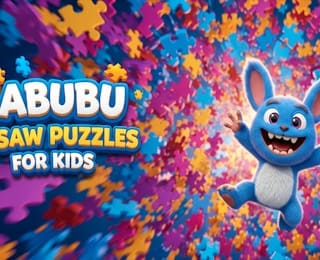
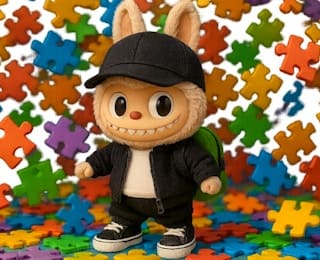
The most reliable jigsaw strategy is boundary first, features second, filler last. Build a frame when possible, then attach recognizable regions such as the Labubu face, cap, jacket, backpack, or shoes. Once anchors exist, remaining pieces can be tested against known neighbors.
A useful mental model is constraint reduction. Every placed piece eliminates positions for other pieces. The more connected the solved region, the fewer plausible homes remain for a loose piece.
For the 100+ puzzle collection, players can improve by varying approach: one session focused on edges, another on color families, another on line continuity. This prevents the routine from becoming mechanical.
Common Mistakes
- Ignoring edges: starting in the center creates too many possibilities.
- Matching only color: similar hues can appear in different regions, so shape matters.
- Forcing placements: if a piece does not align, it probably belongs elsewhere.
- Poor piece management: scattering pieces randomly makes comparison slower.
- Rushing: jigsaw puzzles reward careful observation, not speed alone.
Avoiding these mistakes can make the game feel less stressful and more educational, which aligns with the logic-skill message in the description.
Advanced Tips
Experienced solvers can use subassembly tactics. Instead of placing one piece at a time, build small clusters of three to five pieces away from the board, then move the cluster into position. This is helpful when a region has unique texture but no obvious border.
Another advanced habit is contrast scanning. Look for rare elements: a stitch line, a shoe sole edge, a backpack strap, a highlight in the eye, or a sharp color transition. Rare markers create anchor points faster than broad background areas.
If the puzzle interface allows rearranging the workspace, keep candidate clusters near the region they may belong to. Reducing travel distance for pieces improves focus and flow.
Practice Routine
A short practice routine can build puzzle skill without turning play into homework. Try this sequence:
- Spend one minute scanning the full image or scattered pieces.
- Collect all edge pieces before placing anything.
- Solve one corner and extend one border segment.
- Identify the most recognizable character feature and build around it.
- Finish by matching remaining silhouettes to gaps.
Repeating this routine across several puzzles from the 100+ collection helps players internalize the order of operations. The goal is faster pattern recognition, not necessarily faster completion.
Skill Transfer to Logic Games
Jigsaw puzzles train skills that appear in many logic games: hypothesis testing, elimination, spatial memory, and sustained attention. When a child asks why a piece fits, they are practicing evidence-based reasoning.
Parents and teachers can reinforce transfer by asking open questions: What shape do you need here? Which color is unique? What would happen if this piece were rotated? These prompts turn passive dragging into active problem solving.
The game description claims a 40 percent boost to kids logic skills. Treat that as promotional context, but the underlying puzzle mechanics do support observable reasoning behaviors.