










Labubu Girls Jigsaw Puzzle Tips & Strategy-Labubu Girls Jigsaw Puzzle
Similar Games



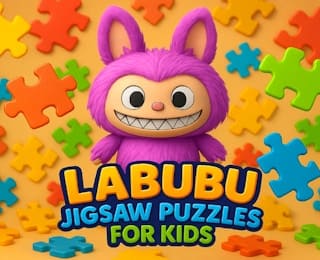
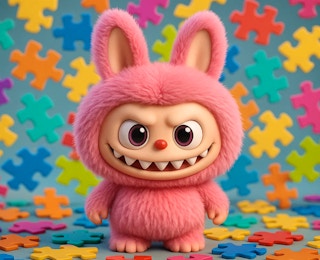
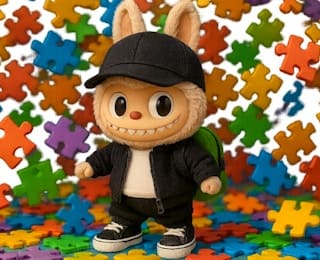
New to jigsaws or returning after a break? These habits make a 100+ piece Labubu scene far less overwhelming:
- Start with the border. Hunt for pieces with one or two flat edges and the four corners, then assemble the frame. The frame gives every interior piece a wall to test against.
- Sort before you build. Spend the first minute grouping pieces by dominant color — the pink of the character, the teal of the background, the bright accent pieces — so you always know which pile to search.
- Use the reference image when present. If the game shows the finished scene, keep it visible and match each piece to its region instead of guessing.
- Work one small area at a time. Complete a single feature (one ear, the grin, one color block) before jumping around; local progress is easier to see than global progress.
- Read the shape, not just the picture. A piece with two blanks on opposite sides is an edge piece; a piece with tabs on all sides is buried in the middle. Shape narrows the search fast.
- Keep your workspace tidy. Push solved clusters aside and leave the unsolved piles reachable so you do not lose track of what remains.
- Be patient with the last few pieces. Endgame is usually the slowest part; methodically test the remaining candidates against the remaining gaps.
Once these feel automatic, level up with the advanced tips and strategy on the same page.
Faster solvers treat a Labubu scene as a set of landmarks rather than a flat image. Use these to cut down search time:
- Anchor on distinctive features. The character's eyes, nose, serrated grin, and tall ears are unique shapes and colors. Build around them early; they act as coordinates for everything nearby.
- Exploit high-contrast patches. Bright, isolated color blocks (a single yellow piece cluster against teal) are quick wins that shrink the unknown area.
- Pre-sort into hue piles and edge piles. Two simultaneous sorts — by color and by edge type — let you grab the correct subset for any given gap without scanning the whole board.
- Build sub-assemblies, then merge. Construct small islands of 4–10 pieces and snap islands together along their shared borders; merging is faster than placing one piece at a time.
- Use negative space. When only a few gaps remain, look at the holes rather than the pieces; the shape of a gap often identifies its piece instantly.
- Count down per region. If a region should hold, say, six pieces and you have placed four, you know exactly how many candidates to test there.
- Rotate your viewpoint. Physically move completed blocks or tilt your head; a seam that looked wrong from one angle often reveals itself from another.
- Take deliberate breaks. Stepping away for a minute resets pattern fatigue; returning players frequently spot the next placement immediately.
These tactics are organized into a repeatable order of operations in the strategy guide below.
Tips are individual moves; strategy is the order and reasoning behind them. The following framework turns the beginner and advanced tactics into a single, repeatable method for any Labubu Girls Jigsaw Puzzle scene.
A repeatable workflow
Open every solve with the same sequence so you never waste energy deciding what to do next. First, sort: separate edge pieces from interior pieces, and bucket interior pieces by dominant color. Second, frame: build the border from the edge pile, leaving corners for last if they are ambiguous. Third, anchor: locate the most recognizable features of the scene (for a Labubu picture, the face and ears) and grow small clusters outward from them. Fourth, merge: join clusters along shared borders. Fifth, close up: use negative space and piece counts to fill the final gaps. Running the same five phases each time converts a chaotic board into a predictable pipeline.
Reading shape versus reading color
Color tells you which region a piece belongs to; shape tells you which exact slot. Beginners over-rely on color and stall when two regions share a hue. The strategic fix is to pair the two: once color narrows a piece to a region, inspect its tabs and blanks to find the matching contour in that region. When color is unhelpful (a large single-color background), shape and the geometry of the remaining gaps become the primary signal. Switching consciously between these two lenses is what separates a steady solver from a frustrated one.
Region-first versus subject-first
There are two viable opening philosophies. Subject-first builds the character (the Labubu figure) before the background, which is excellent when the subject is colorful and detailed but the backdrop is flat — you get fast, motivating progress on the interesting part. Region-first sweeps the border and then fills quadrants systematically, which is better when the scene is busy and evenly colored because it prevents orphaned pieces in the middle. Look at the scene for ten seconds and choose: detailed subject on a plain background goes subject-first; uniform busy background goes region-first. Either way, the frame and the sort phases stay constant. Combining a fixed workflow with a deliberate opening choice is the core of an efficient Labubu jigsaw strategy.
Avoiding these errors saves more time than any single trick:
- Forcing a piece that does not fit. If a piece will not seat cleanly, it is wrong for that slot; stop pushing and test another candidate. Forcing creates misaligned seams that are painful to undo later.
- Ignoring the edges early. Skipping the border means every interior piece lacks a reference wall, so you re-check positions repeatedly.
- Leaving pieces scattered and unsorted. Searching a random pile for each placement is the slowest possible method; a one-minute sort pays for itself many times over.
- Relying on color alone. Two regions can share a hue; without reading edge shape you will keep trying pieces in the wrong place.
- Starting in the busy middle. The center usually has the least distinctive features; beginning there yields little feedback. Build from edges or anchors instead.
- Re-scanning the same area over and over. If a region has resisted you twice, switch regions; returning later with more context often reveals the missing piece instantly.
- Not using the preview when it exists. Ignoring an available reference image throws away the single easiest matching tool.
- Playing through frustration. Fatigued eyes miss obvious shapes; a short pause prevents the cascade of small errors that follows a long, tense session.
The beginner and advanced tips on this page provide the positive habits that replace each of these mistakes.