Expected input for a browser jigsaw puzzle
This game is listed as an online jigsaw puzzle, so the main interaction is likely the standard puzzle-board control scheme: choose a loose piece, move it, and place it where it belongs. On a computer, that usually means using a mouse or trackpad to click and drag. On a touchscreen device, the same action is typically performed by tapping and dragging with a finger.
- Select a piece: Press or click the puzzle piece you want to move.
- Drag the piece: Move it across the screen toward the partially completed picture.
- Release to place: Let go when the piece appears to fit the shape and artwork.
- Adjust if needed: If a piece does not lock into place, move it again and try a nearby position.
Device and interface notes
The supplied metadata does not document keyboard shortcuts, gamepad support, zoom buttons, rotation tools, or hint controls. Because the game is embedded online, the visible interface may adapt to the screen size, and players should rely on obvious piece targets rather than assuming special tools exist.
For younger children, precise clicking and dragging can be the hardest part. An adult can model slow, deliberate movements and help keep pieces organized without taking over the solve.
For a broader session overview, continue to the gameplay guide.
What a play session looks like
A typical session with Labubu Jigsaw Puzzles for Kids centers on choosing one image from the advertised collection of 50+ puzzles and completing it piece by piece. The published description does not outline a campaign map, ranked mode, or competitive leaderboard, so the most accurate way to describe the loop is casual puzzle solving: select, assemble, finish, and return for another picture.
- Open the game online: The listing says the game is available for free online play at LightPlayHub.
- Choose a Labubu puzzle: With more than fifty puzzles mentioned, players can browse the available images and pick one that looks fun or manageable.
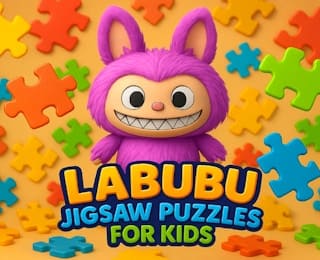
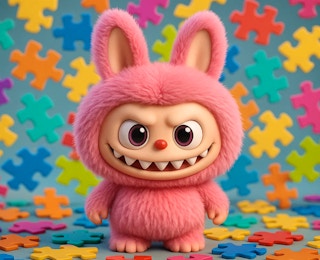
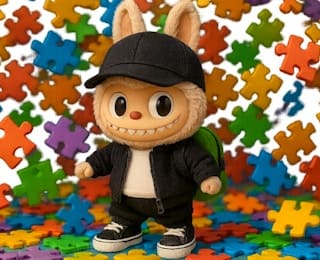
- Study the target image: Before moving pieces, look at the completed character art. The Labubu design includes strong visual anchors such as purple fur, large ears, eyes, nose, and a wide grin.
- Assemble the picture: Place edge pieces first, then fill interior sections by matching shape and color.
- Complete and repeat: Once the image is finished, players can move on to another puzzle from the collection.
Using the puzzle collection well
Since the metadata does not label difficulty, players can self-select by visual complexity. Simpler puzzles tend to have larger blocks of one color and clearer silhouettes. More challenging puzzles may include busier backgrounds, finer shading, or more repeated shapes around the teeth and fur.
A good session habit is to treat each puzzle as a standalone warm-up. If the platform allows returning later, players can stop after a satisfying solve. If not, short focused attempts are still useful, especially for kids who may tire quickly.
What is not specified
The available information does not state whether puzzles have fixed piece counts, whether difficulty increases gradually, whether progress is saved, or whether there are time limits. Because of that, this gameplay guide should be treated as a practical overview of the jigsaw loop rather than a claim about hidden systems.
If you need direct instructions for placing pieces, see how to play. For advice on getting faster and reducing frustration, read the tips page.