Polygami Jigsaw Puzzles is played by assembling geometric animal images from polygonal pieces. The exact interface may vary by platform, but the core loop is straightforward: review the target design, identify matching shape fragments, place them into the developing picture, and continue until the animal composition is complete.
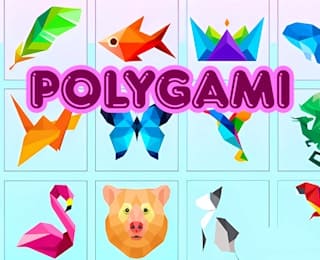
The visible artwork suggests a range of targets, from birds and fish to butterflies, mammals, and geometric decorative forms. That variety means the same core method applies, but the best anchor pieces change from puzzle to puzzle. A beak, fin, wing, snout, horn, crown point, or leaf tip can all serve as a starting reference.
Basic play loop
- Study the finished image. Before moving pieces, look at the full animal design and notice major color zones, heads, tails, wings, fins, or symmetrical parts.
- Identify distinctive pieces. Pick out polygons with unusual colors or sharp angles that likely belong to eyes, beaks, fins, horns, ears, or edge regions.
- Place anchor shapes first. Start with pieces that define the outline or a strong central feature. These anchors make the remaining space easier to judge.
- Build outward in clusters. Connect neighboring polygons by matching edge direction, hue, and shadow. Small clusters are easier to manage than isolated pieces.
- Check negative spaces. As the image fills in, use the empty gaps to infer what shape and color should come next.
- Complete and review. Once all visible gaps are filled, compare the result with the intended geometric animal style and adjust any misplaced facets.
If you are new to the game, read the tips guide after this overview to learn how to reduce trial and error.
A reliable gameplay guide for Polygami Jigsaw Puzzles focuses on visual decomposition. Because the animals are made from flat geometric facets, success depends less on memorizing fixed jigsaw tabs and more on reading shape relationships, color transitions, and silhouette logic.
Recommended solving sequence
- Outline first: If the puzzle presents a clear border or outer silhouette, establish the perimeter before filling interior details.
- Feature second: Move to high-recognition areas such as faces, wings, tails, crowns, or bright accent shapes.
- Large blocks third: Fill broad body regions with adjacent polygons that share the same color family.
- Detail last: Save small contrasting triangles and edge fragments for the end, when the surrounding context is already fixed.
Reading polygon art
Low-poly designs often use light and dark facets to suggest volume. A darker triangle may indicate a shadowed side of a body, while a bright facet may mark a highlight or decorative accent. Training your eye to read these gradients helps you predict where a piece belongs even before testing it.
Region-based approach
Instead of treating the whole board as one challenge, divide the target into regions: head or face, main body, appendages, and accent details. Finish one region enough to create stable edges, then move to the next. This method is especially helpful for animals with multiple limbs, wings, or decorative elements.
When a puzzle feels stuck
Step back from the board and scan for the most unique color or angle. If several pieces seem possible, compare their edges with the empty region rather than forcing a fit. The goal is to maintain a clean geometric flow across the animal image.
The central mechanic of Polygami Jigsaw Puzzles is geometric shape combination. The game description and artwork indicate that players construct animal masterpieces from polygonal components, with a large library of possible combinations.
What the mechanic emphasizes
- Visual matching: players rely on color, angle, and proportion to decide where a shape belongs.
- Compositional assembly: individual polygons combine into larger animal silhouettes and decorative forms.
- Variety through combinations: the described 1000+ shape combinations suggest that replay value comes from diverse arrangements rather than a single static puzzle image.
- Facet-based readability: sharp edges, flat color planes, and shadow gradients provide the main clues for placement.
Polygon vocabulary
Even without a formal tutorial, the visual language is easy to learn. Triangles often create points such as beaks, fins, ears, or crown spikes. Larger polygons fill bodies and wings. Narrow shards can bridge color transitions or define outlines. Recognizing these roles helps players move from random guessing to intentional assembly.
What is not specified publicly
The available description does not confirm detailed scoring formulas, timed rounds, competitive modes, or a fixed level count. For practical guidance, it is safest to treat Polygami as a creative jigsaw puzzle experience focused on completing geometric animal designs. Players looking for exact rules should use the in-game interface and official platform information as the final reference.
This mechanic-focused view connects directly to the How to Play page, which turns the same principles into a practical step-by-step routine.