How to Play Shapeshifter Tetris
Shapeshifter Tetris is played on a puzzle board where the player controls blocks in a Tetris-style environment. The objective, as described by the game listing, is to clear lines strategically while adapting to blocks that morph under pressure. The following workflow captures the practical flow for a new player.
Basic step sequence
- Open the game from the online play page and begin a level.
- Observe the existing stack before focusing on the incoming block.
- Move and position the active block using the control scheme displayed in the game.
- Check whether the block shows any sign of transformation before committing to a final placement.
- Place the block into a position that reduces risk and supports future line clears.
- Clear complete lines when available to lower board pressure.
- Repeat the process while managing escalating obstacles across the level set.
What to prioritize as a beginner
New players should prioritize board survival over perfection. A modest line clear that keeps the stack low is usually better than a complicated placement that leaves the board uneven. Because the game emphasizes real-time transformation, the ability to recover from an imperfect setup is more valuable than executing a theoretically ideal move.
How transformation changes play
In a conventional stacking puzzle, players often plan around a fixed piece shape. In Shapeshifter Tetris, the description indicates that blocks can morph under pressure, so planning must include contingency. A safe placement is one that remains workable even if the block changes after it is positioned or while the board state shifts.
Reading the board
Scan for three issues: excessive height, isolated gaps, and uneven surfaces. Height reduces reaction time, gaps complicate future clears, and uneven surfaces make transforming blocks harder to place safely. Training yourself to spot these problems early is the fastest way to become competent.
Game Rules
The public description does not provide a complete rule manual, but the confirmed design rules are clear enough to form a practical foundation. Shapeshifter Tetris is presented as a block-stacking puzzle with line clearing, transforming blocks, escalating obstacles, and a level campaign advertised at 100+ levels.
Confirmed rule elements
- The game belongs to the Tetris category and uses block-stacking logic.
- Players are expected to clear lines strategically.
- Blocks can morph under pressure, changing the immediate puzzle state.
- Obstacles escalate, increasing the demand on reflexes and foresight.
- The advertised structure includes 100+ levels to conquer.
Practical interpretation for players
Until an official rule sheet specifies exact scoring, penalties, or game-over conditions, players should treat board congestion as the primary risk. In most Tetris-style puzzles, letting the stack grow too high limits future movement and can end an attempt. The safe assumption is that maintaining a low, even board is always preferable to chasing risky clears.
Rules that affect decision making
The most important rule-like behavior is not a point total but the interaction between line clearing and transformation. Clearing a line can relieve pressure, but a poorly timed clear can also expose weak columns or create awkward surfaces for the next morphing block. Rules understanding in this game is therefore less about memorization and more about anticipating consequences.
What is not confirmed
The available information does not specify exact controls, scoring formulas, level unlock requirements, or special piece types. Players should rely on the in-game interface for precise operational details and use the broader guidance on this site for strategy and improvement.
Game Mechanics
Shapeshifter Tetris mechanics combine a familiar Tetris foundation with adaptive transformation pressure. The result is a puzzle system where placement value is temporary unless the surrounding board can absorb change.
Block stacking
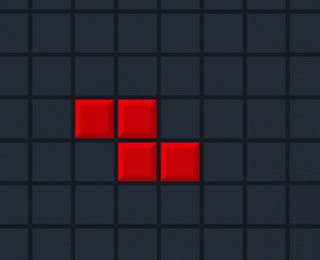
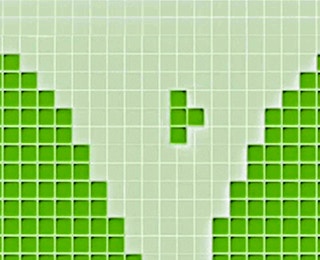
The base mechanic is classic block placement on a grid. Players position pieces to form complete lines and manage the height of the stack. This provides the strategic skeleton that makes the game accessible to fans of traditional Tetris-style puzzles.
Real-time transformation
The distinguishing mechanic is that blocks morph under pressure. This means the game does not let players treat every piece as a fixed object. A shape that seems manageable can become more disruptive, requiring rapid reassessment and flexible board design.
Adaptive pressure
The description says the mechanics challenge both reflexes and foresight. Reflexes help when a transformation happens quickly, while foresight helps prevent boards that are fragile before the change occurs. Strong play comes from combining both: reacting cleanly to surprises while reducing the number of surprises that matter.
Line clearing as relief
Line clearing is not only an objective but a pressure valve. Removing completed rows creates space, lowers the stack, and can restore options. However, clearing lines without regard for board shape can create new vulnerabilities, especially when the next block may transform.
Escalating obstacles
The advertised escalation suggests that mechanics become more demanding over time. Rather than relying on one static pattern, players must adapt to increasing complexity. This makes the game a test of sustainable decision quality, not just short-term speed.