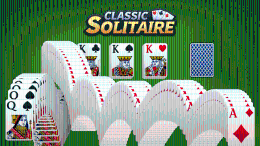
Strategic Guide to Winning Solitaire
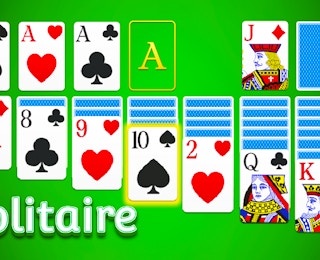
While Solitaire Classic involves an element of luck in the initial deal, winning consistently is largely a matter of strategy and logical deduction. Here is a comprehensive guide to the core principles of Klondike Solitaire strategy.
Prioritize the Foundations
The most important rule of solitaire strategy is to move cards to the foundation piles as soon as possible. Every card you move to a foundation permanently removes it from the board, reducing clutter and opening up new possibilities. Do not hold onto a card just because it might be useful on the tableau; if it can go to a foundation, put it there.
Build Down Sequences in the Tableau
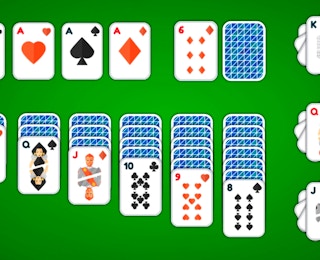
When building your tableau columns, try to create long, alternating-color sequences. A long sequence (like a King down to a 5) is highly valuable because you can move the entire stack in one go, freeing up the card beneath it. This is especially useful when you need to flip over a face-down card to reveal a useful card.
Keep High Cards Accessible
Low cards (Aces and 2s) are the most valuable because they can start foundation piles and fill gaps in the tableau. High cards (Jacks, Queens, Kings) are less flexible. Try to keep your low cards face-up and accessible on the tableau, while using high cards to build your sequences.
Manage the Stock Pile Carefully
The stock pile is your safety net, but drawing from it blindly can ruin your game. Only draw from the stock when you have exhausted all possible moves on the tableau. Drawing cards unnecessarily will only bury useful cards in the waste pile and limit your options.
Plan Multiple Moves Ahead
Before making a move, ask yourself: Does this move open up a new card? Does it clear a column? Does it free up a foundation? If a move doesn't achieve one of these goals, it is likely a bad move. Always look for moves that increase your available options rather than just moving a card because you can.
Essential Tips for Beginners
Starting out with Solitaire Classic can be overwhelming, especially when you lose a game after spending 20 minutes on it. Here are some essential tips to help beginners avoid common pitfalls and start winning more games.
Open All Columns Early
The primary goal in the early game should be to flip over all the face-down cards in the tableau. Every time you flip a card, you gain new information and new options. Don't get too attached to your current tableau setup; breaking it apart to reveal hidden cards is almost always the right move.
Don't Move Aces Too Early
While you should move Aces to the foundation as soon as they are available, be careful not to move them if they are blocking a crucial tableau sequence. However, in standard rules, if an Ace is free and can go to the foundation, you should almost always do it.
Use the Undo Button Liberally
Many beginners are afraid to use the undo button, thinking it cheats the game. It doesn't. Using undo allows you to experiment with different strategies. If you make a move and realize it was a mistake, undo it immediately. This prevents you from getting trapped in a dead end.
Watch Your Stock Pile
Never draw from the stock pile if you still have valid moves on the tableau. Drawing from the stock is a last resort. If you draw a card that doesn't fit, it goes to the waste pile, and you might have to recycle the entire deck later, losing valuable information.
Accept the Element of Luck
Sometimes, the initial deal is just bad. Not every game is winnable. If you find yourself stuck with no legal moves and the stock is empty, accept the loss and start a new game. Getting frustrated won't change the cards on the board.
Advanced Tactics for Expert Players
Once you have mastered the basics, it is time to elevate your gameplay. Advanced solitaire players use probability, card counting, and deep strategic planning to win even the most difficult deals. Here are advanced tactics to take your game to the next level.
Card Counting and Probability
As you play, keep a mental tally of the cards you have seen. If you have already used three Kings on the tableau, you know that the fourth King is either in the stock pile or face down in the tableau. This knowledge helps you make calculated decisions about whether to draw from the stock or hold off.
Column Control
Controlling empty columns is a hallmark of advanced play. Remember that only a King can go into an empty column. If you have a King available, immediately move it to an empty column to build a foundation sequence. Conversely, if a complex deal creates an empty column, you can use it to temporarily store a long sequence to clear a blocked area.
The Three-Card Draw Variation
If you are playing the alternative game mode that uses a three-card draw, the strategy changes significantly. You must look at all three cards in the waste pile before making a move. Plan your tableau moves to accommodate the top card of the three-card draw, rather than just reacting to the single card in the standard mode.
Backtracking and Simulation
Advanced players often simulate moves in their head. Before clicking to move a card, mentally trace the consequences: If I move this Queen, it reveals a 7 of Hearts. If I move that 7, I can move the Jack. This opens up the King. This mental simulation prevents you from making short-sighted moves that lead to dead ends.
Endgame Precision
The endgame requires flawless execution. When you are down to the last few cards, every move is critical. Do not make random moves to clear space. Every move must directly contribute to building a foundation pile or setting up the final sequence. Take your time, and if you are unsure, use the undo button to try an alternative path.












61762545.jpg)

60548019.jpg)
60802768.jpg)