






Trezelines Tips and Common Mistakes-Trezelines: Drawing Puzzle Challenge
Similar Games
Beginner Tips for Trezelines
New players often improve fastest by changing how they approach the screen, not by drawing faster. These tips focus on building reliable habits.
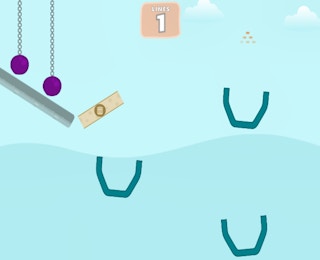
- Observe before you draw. Identify which objects are fixed, which are suspended, and which are likely to move after contact.
- Start with one line. The 13-line challenge rewards restraint. A single thoughtful stroke teaches more than several random ones.
- Think in angles. A gentle slope can slow an object, while a steep angle may accelerate it or cause it to miss a target.
- Watch the lives counter. Treat lives as a signal to slow down, especially in puzzles with multiple moving parts.
- Solve the most unstable object first. Hanging balls and loose planks often create chain reactions. Stabilizing them early reduces surprises.
- Use open space wisely. Empty areas are not wasted; they are where lines can be placed without interfering with existing objects.
- Pay attention to containers. If cup-like shapes are present, aim for clean entry rather than edge contact.
- Treat water-like areas as important. They may be hazards, boundaries, or special physics zones, so notice how objects behave near them.
A Simple Practice Loop
Use a three-step loop on every puzzle: predict, place, review. Predict where the object will go, place one line that changes that path, then review the result before making another decision. This loop prevents the common beginner habit of drawing reactively.
Practice Drills
- Before drawing, name the target object aloud or mentally.
- Draw only one line for the first three attempts on a new puzzle.
- After each failure, identify whether timing, angle, or length was wrong.
- Keep a mental note of one useful shape, such as a shallow ramp or short bumper.
How to Build Confidence
Confidence in drawing puzzles comes from repeatable observations. If a short bumper stops a falling object in one puzzle, remember that pattern. If a ramp sends a coin too far, remember the angle. Over time, these small lessons become an internal library of physics solutions.
When a Puzzle Feels Too Hard
Step back and describe the puzzle in plain language. Instead of thinking about lines, ask: what needs to happen to which object? Often the solution becomes clearer once the goal is separated from the drawing tool.
Common Mistakes to Avoid
Many failed attempts in Trezelines come from a few repeatable errors. Recognizing them can save lines and lives.
- Drawing impulsively. Placing a line before understanding the object path often creates a new problem instead of solving the old one.
- Ignoring momentum. A swinging or sliding object continues moving after contact. Stopping it at the visible position is not enough; players must account for where it is going.
- Overbuilding the solution. Adding extra lines can cause unintended collisions, blockages, or chain reactions.
- Forgetting secondary objects. Moving one plank or ball may shift a coin, container, or another hazard. Solutions need to be checked across the whole scene.
- Using the same line shape every time. Not every puzzle needs a long bridge. Some require a tiny bumper, a short shelf, or an angled guide.
- Chasing perfection too early. Trying to design the ideal solution on the first attempt can waste lives. A conservative test line can reveal the puzzle behavior more safely.
- Overlooking the lives display. When lives are low, risky experiments become more costly. Switch to smaller, more deliberate changes.
- Treating every puzzle as identical. With 50+ physics puzzles, the game likely varies its pressures. What works for a falling object may fail for a swinging weight or a container target.
Mistake Recovery Checklist
- Did the line touch the intended object?
- Did the object move in the expected direction?
- Did another object interfere?
- Was the line too long, too short, too steep, or too flat?
- Can one small adjustment test the answer?
How to Recover From a Bad Attempt
After a failure, isolate the first mistake. Ask whether the line was placed in the wrong location, at the wrong angle, at the wrong time, or for the wrong object. Changing one variable at a time makes the next attempt more informative.
Mistake-Proofing Habit
Before drawing, say mentally what the line is supposed to do. If the answer is vague, such as help the object, the plan is not ready. A stronger intention, such as slow the ball before it reaches the plank, leads to better placement.